

Water tanks quietly support everyday life. We turn on a tap and expect water to be there. Simple. But behind that convenience is a small system that needs attention. When it’s ignored, tanks overflow, pumps run dry and electricity is wasted. This is where a water level controller becomes extremely useful.
Think about a typical home with an overhead tank. Someone usually checks the tank and switches the motor on or off manually. It works, but it isn’t always efficient. A water tank level controller helps manage this process by indicating or controlling water levels automatically.
Modern systems now rely on a water level controller sensor to detect the amount of water inside the tank. With the right setup, water supply becomes easier to manage and far more reliable.
What is an Automatic Water Level Controller?
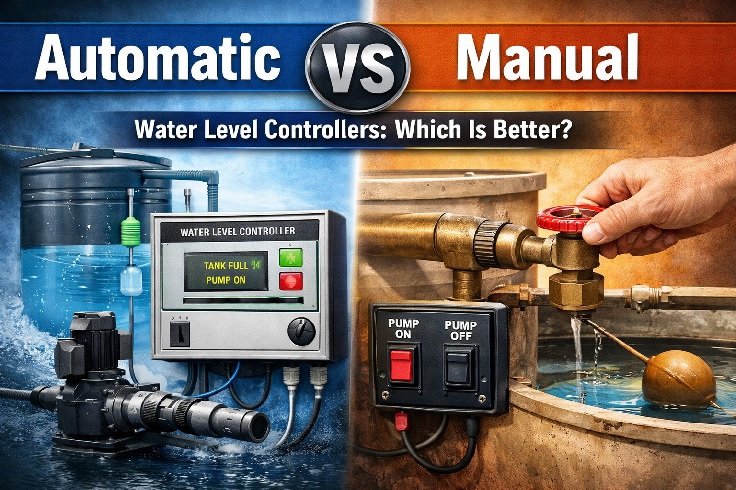
An automatic water level controller manages the water level in a storage tank without manual involvement. It monitors the tank. Also, it controls the pump automatically once installed.
The auto water level controller activates the pump when the water inside the tank drops below a certain level. Water begins to fill the tank immediately. When the tank becomes full, the system shuts the pump off again.
The entire process operates through a water level controller circuit connected to sensors placed inside the tank. These sensors detect water levels continuously and send signals to the controller, so the pump runs only when needed.
What is a Manual Water Level Controller?
A manual system works in a much simpler way. Instead of controlling the pump automatically, it mainly helps users monitor the tank level.
For example, a basic water level controller often includes indicator lights or a display panel that shows the water level inside the tank. These indicators rely on a water level controller sensor placed at different heights inside the tank.
Once the user sees the level indicator, they manually turn the pump on or off. This approach is common in smaller homes. However, it depends heavily on attention. If the pump is forgotten for too long, water may overflow and electricity may be wasted.
How Does a Manual Water Level Controller Work?
A manual system mainly provides information about the water level inside the tank. The water tank level controller displays signals. This helps users understand whether the tank is empty, partially filled, or full. The user manually switches the pump on or off after checking the indicator.
- Water Level Detection
The first step involves detecting water levels inside the tank. A water level controller sensor is placed at specific points inside the tank. When water reaches those sensors, signals are generated. These signals indicate how full the tank is. Instead of starting the pump automatically, the system simply provides information for the user to observe.
- Indicator System
The signals produced by sensors travel through a simple water level controller circuit connected to indicator lights. Each light represents a different water level. For example, one light may show when the tank is empty, while another indicates when it is nearly full. The user reads these indicators before deciding whether to operate the pump.
- Manual Pump Operation
Once the tank level is known, the responsibility shifts to the user. The water tank level controller does not directly control the pump motor. Instead, it acts as a monitoring system. If the tank level is low, the user switches the pump on. When the tank fills up, the pump must be turned off manually.
- Dependence on Attention
Manual systems rely heavily on regular observation. Someone must check the indicators and operate the pump accordingly. If the pump continues running for too long, water may overflow. In such cases, even a reliable water level controller cannot prevent mistakes because the system still depends on human attention.
How Does an Automatic Water Level Controller Work?
Automation removes the need for constant monitoring. The automatic water level controller observes the tank continuously using sensors. The pump starts automatically when the water level drops below a certain point. The water level controller circuit shuts the motor off immediately when the tank fills again.
- Continuous Level Monitoring
Automation begins with sensors installed at different heights inside the tank. Each water level controller sensor detects whether water is present at that point. These sensors send signals to the controller throughout the day. The controllers can respond instantly whenever the tank needs refilling as the system continuously monitors water levels.
- Automatic Pump Activation
When the tank water drops below a preset level, the controller immediately activates the pump. This is where the auto water level controller becomes useful. The pump starts automatically without any human intervention. As a result, the tank begins filling right away, ensuring a steady water supply throughout the building.
- Automatic Pump Shut Off
The upper sensor detects the rising water level when the tank fills up. The automatic water level controller then switches the pump off automatically. This prevents water from overflowing. It also reduces unnecessary electricity consumption. The system helps maintain efficient water usage as the pump runs only when required.
- Instant Response System
Automation also means faster response. The water level controller sensor constantly sends updates to the controller whenever water levels change. This real-time monitoring ensures the pump starts or stops exactly when needed. Because the system reacts immediately, the tank remains balanced without requiring manual checking.
Difference Between Automatic and Manual Water Level Controllers
| Feature | Manual Controller | Automatic Controller |
| Pump Control | Operated by user | Operated automatically |
| Monitoring | Indicator lights | Sensors monitor continuously |
| Risk of Overflow | Possible if forgotten | Very low |
| Convenience | Requires regular checking | Works automatically |
| Initial Cost | Lower | Slightly higher |
Which is Better?
Choosing between the two systems depends mainly on convenience and water usage habits. A water level controller can function effectively in both formats. However, the decision usually depends on whether users prefer manual monitoring or automatic operation that manages the water supply without constant supervision.
When Manual Controllers Are Suitable?
Manual systems work well in smaller homes where the tank is easy to access and monitor. A basic water tank level controller can provide enough information for users to operate the pump themselves. These systems are affordable and simple. However, they require consistent attention to avoid water overflow.
When Automatic Controllers Are Better?
Automation becomes more useful when tanks are located on rooftops or in buildings that check them frequently is inconvenient. An automatic water level controller removes the need for daily monitoring. With the help of an auto water level controller, pumps operate only when required, reducing water waste and protecting the motor.
Conclusion
Water management is a major issue that can be treated as a minor issue. However, it can lead to significant changes in everyday life. A reliable water level controller assists keeping the tanks at the right level, avoids overflows and also makes sure that the pumps run safely.
The cost of manual systems is low and their systems are easy. Nonetheless, automation is more convenient and reliable. Automatic solutions can simplify and enhance the management of water to modern buildings and homes with the use of sensors, intelligent monitoring and a well-designed water level controller circuit.
No matter which type you choose, it is essential to buy durable products from a reliable brand. This is where you find Lauritz Knudsen Electrical & Automation. The brand offers automatic as well as manual water level controllers. Lauritz Knudsen water level controllers are versatile solutions designed for single and double tank operations. They effortlessly handle draining and filling liquids. So, you can easily trust Lauritz Knudsen for smart water management.
